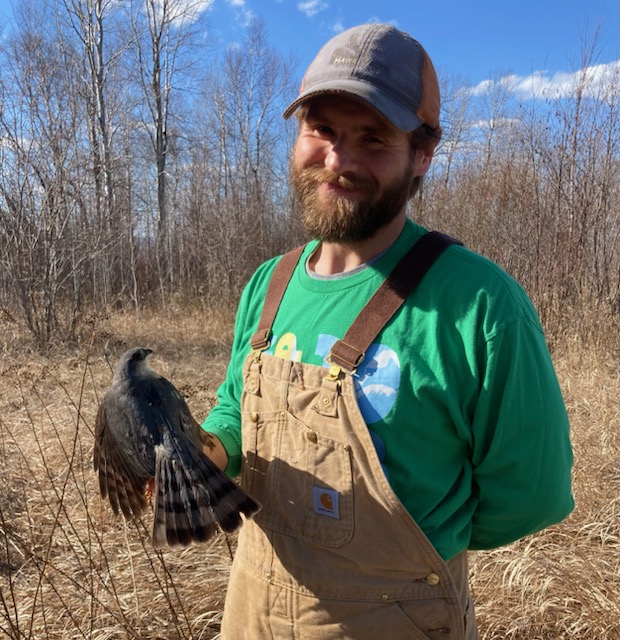
At CGORS this fall, our banding director Danny Erickson will be starting a MSc graduate project at UW-Green Bay! His research will investigate the potential impacts of a newly discovered oral disease on Sharp-shinned Hawk (SSHA) movement and survival, record the prevalence and possible origin of this disease, and expand our current knowledge of the full annual cycle landscape use for SSHA. This work will also build upon the broader Sharp-shinned Hawk Project.
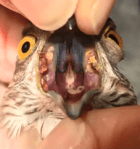
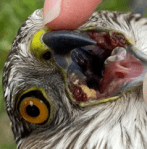
This disease, also known as capillaria, was first detected in SSHA in 2016 at Braddock Bay Raptor Research in NY (see below) and causes abnormal lesions in the mouths of some raptors. CGORS, along with other banding stations in eastern North America, began looking for capillaria in SSHA and found increasing infection rates in SSHA over time. The scale of impact this emerging disease poses for other wild or domestic bird species is largely unknown, with mortality in Eurasian Sparrowhawks, a closely related raptor, with capillaria documented in Europe.
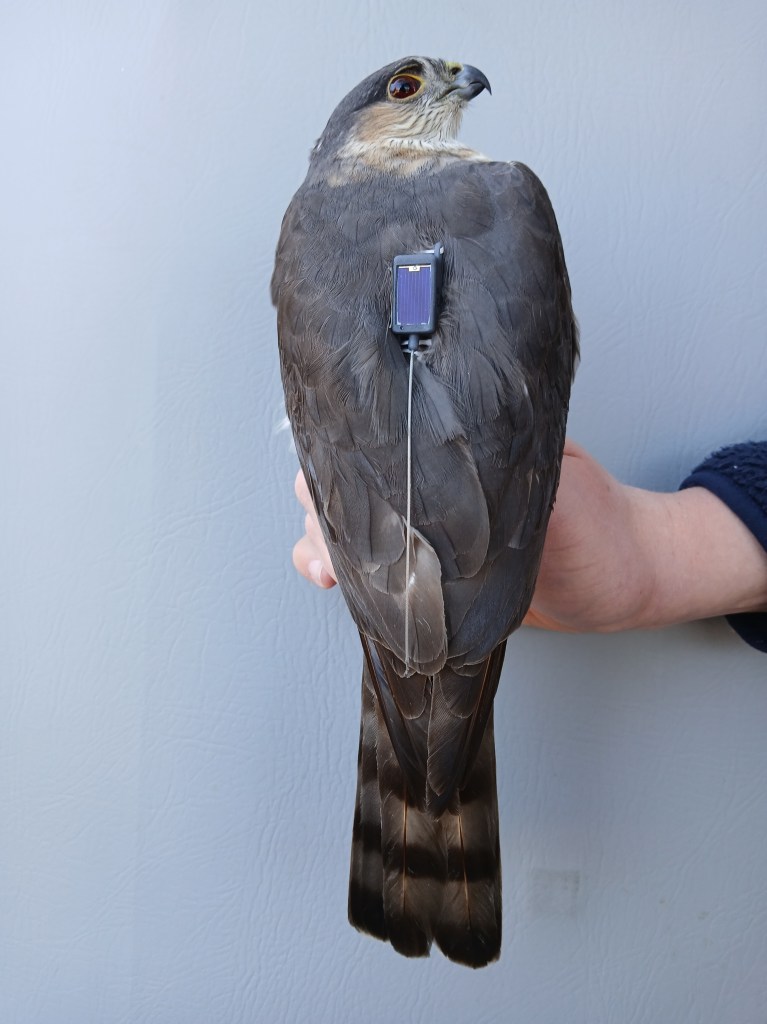
We will be deploying GPS transmitters on Sharp-shinned Hawks to study their migratory pathways and perform stable isotope analysis (SIA) on feather samples to determine probable breeding origins of infected SSHA. Through coordinating concurrent tracking research on SSHA across a broad range and incorporating isotopic analyses, this project will help to determine the impact of a novel disease on wild bird populations across the Great Lakes region.
If you are interested and able, you can make a tax-deductible donation to support Danny’s SSHA research at GoFundMe or send a check payable to CGORS, P.O. Box 156 Glenbeulah, WI 53023 with “SSHA Grad Project” in the memo.
Information from Braddock Bay Raptor Research
“During the spring of 2016, Braddock Bay Raptor Research (BBRR) banders started to notice deformed mouths on some of the Sharp-shinned Hawks that were captured at our banding stations. Closer examination revealed some lesions on the inside of bird’s mouths. After discussion with other raptor banders around the country, this was a relatively new issue being documented in this species.
There were some guesses about what the infection might be, but no one had actually done the laboratory work to figure out what it was. In the spring of 2017, some infected birds were transported to Cornell University, where Dr. Sara Childs-Sanborn treated them and determined that the infection was a capillarid nematode Eucoleus dispar. Her results were published in 2019 (Journal of Wildlife Diseases, 55(4): 928-934).
This parasitic infection is common in raptors, though usually does not present itself in such an obvious, and graphic, way. The banders at BBRR have been making more careful examinations of Sharp-shinned Hawks over the past few years, concluding that it is now present in about 42% of those banded at Braddock Bay. We do not know why this infection is being seen now, when it was not seen in earlier years. Is it related to some toxin that the birds are being exposed to? It is related to habitat changes? Most importantly, we do not know how this infection might impact a bird’s overall health and survival.
BBRR has been pushing forward on the investigation into the observed oral lesions on Sharp-shinned Hawks. We are continuing to examine and document all the sharpies that we capture, and are expanding this study to other stations around the continent as well.”
The Cedar Grove Ornithological Research Station was the second station involved in this ongoing study
2022 BBRR intern Eliana Heiser presented a poster on the project at the October 2022 Raptor Research Foundation Conference. View the poster here: Raptor Research Foundation Conference Poster on SSHA Study


 Cedar Grove Ornithological Research Station