The Cedar Grove Ornithological Research Station is located in Cedar Grove, Wisconsin, on land owned by the State of Wisconsin’s Department of Natural Resources (DNR) and operates in cooperation with this agency. The land is designated a State Natural Area. The Station, however, operates independently of the State; it receives no state financial support, and the personnel of the Station are not state employees.
The Station operates during the fall bird migration from mid-August to mid-November. During this period, a dawn-to-dusk observation is maintained daily and every passing bird of prey, or raptor, is recorded. (Raptors consist of vultures, hawks, falcons, eagles, osprey and owls.) From the beginning of October to mid-November, the Station also traps owls at night. Because of geographical features peculiar to the site, large numbers of raptors pass over the Station.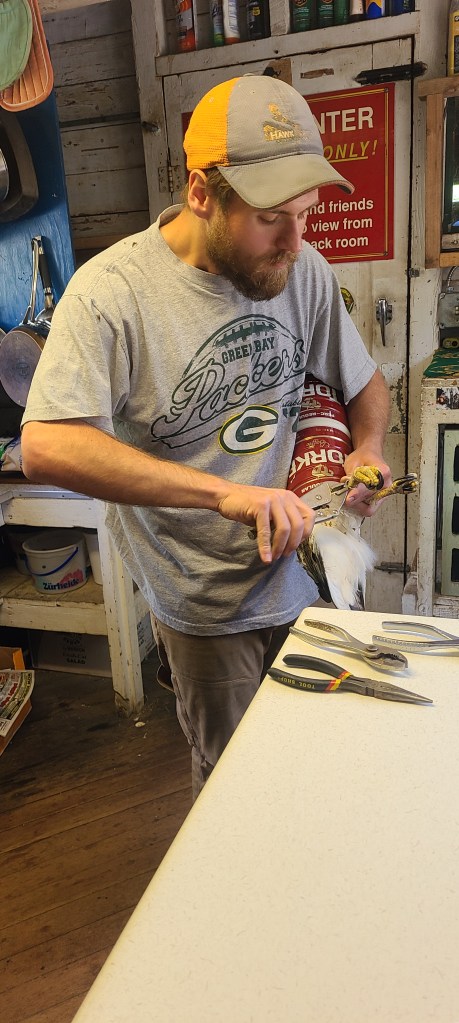
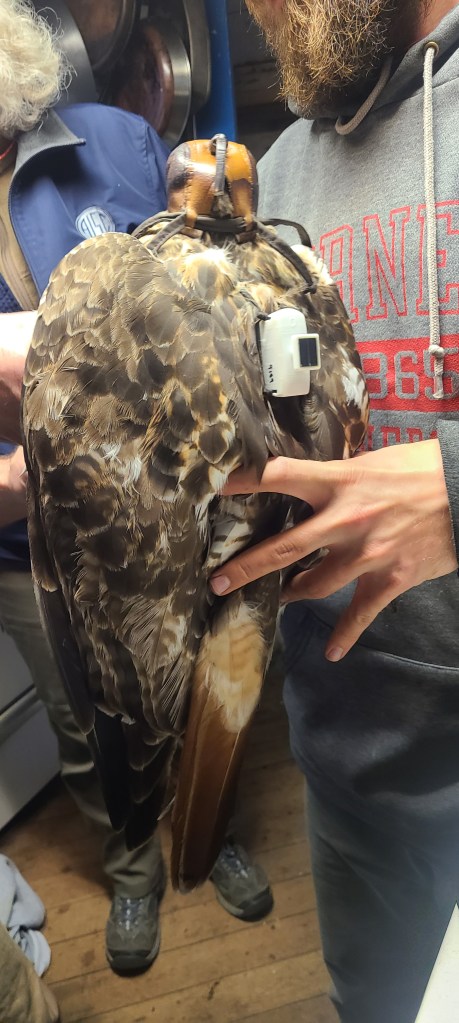
The diurnal observations are condensed into an annual report and also stream to the Hawk Migration Association of North America. The data is banked, for use by researchers, at HawkCount.org and is also available for the public to view in near-real time on-line. In addition, Station personnel trap roughly 500 to 1000 raptors per season. These birds are banded with US Fish and Wildlife Service bands by trained personnel with appropriate permits and various morphological data are collected (mass, body measurements, molt, etc.) before the birds are released unharmed. This work has been performed since 1950, producing a wealth of data unique to this site. The station collaborates with researchers from multiple organizations to help collect the data they need to further current raptor research, at times deploying tracking devices which takes specialized skill, training, and USFWS permits. These activities have provided decades of standardized monitoring data useful in assessing the conservation status of raptors, advancing scientific knowledge, and promoting the conservation of raptor populations.
Personnel include unpaid volunteers from the local community, including Officers and Directors. The station may also fund a sub-contractor, as needed. In addition, the Station brings in one or two interns each year. Interns are young professionals in the Environmental Sciences who are seeking field experience. The Station provides them with the rare opportunity to learn raptor trapping and banding techniques. Many interns go on to obtain advanced degrees related to Ornithology. In addition to the above, Station staff and volunteers provide assistance to the Eastern Wisconsin Kestrel Project during the off season.
The Station also offers field trips through the Natural Resources Foundation of Wisconsin to educate the public about raptors and our work towards their conservation. These are run both at the Station during fall migration and during the summer, on-site, during our American Kestrel nesting work. Public education encourages raptor conservation.
We publish our findings in peer-reviewed scientific journals, all of which are readily available to the public. No revenue is derived from such publications
Funding for all our programs is obtained through contributions from interested members of the public and the resulting Cedar Grove Ornithological Research Station Fund Family of the Wisconsin Conservation Endowment, administered by the Natural Resources Foundation of Wisconsin. Small grants are also obtained at times. All monies are used directly in support of the activities here described.
 Cedar Grove Ornithological Research Station